
Why Every Marketer Needs to Embrace ChatGPT Ads Now
Introduction
Advertising is shifting again, and this time, it’s conversational.
For years, digital advertising has been dominated by intent-based search (Google) and interest-based targeting (Meta). Now, a new player is quietly changing the rules: ChatGPT Ads.
As AI adoption accelerates globally, including across Africa, marketers are asking the real questions:
When did ChatGPT Ads start? How do they work? How do they compare to Google and Meta? And most importantly, are they the future?
Let’s break it down.
What Are ChatGPT Ads?
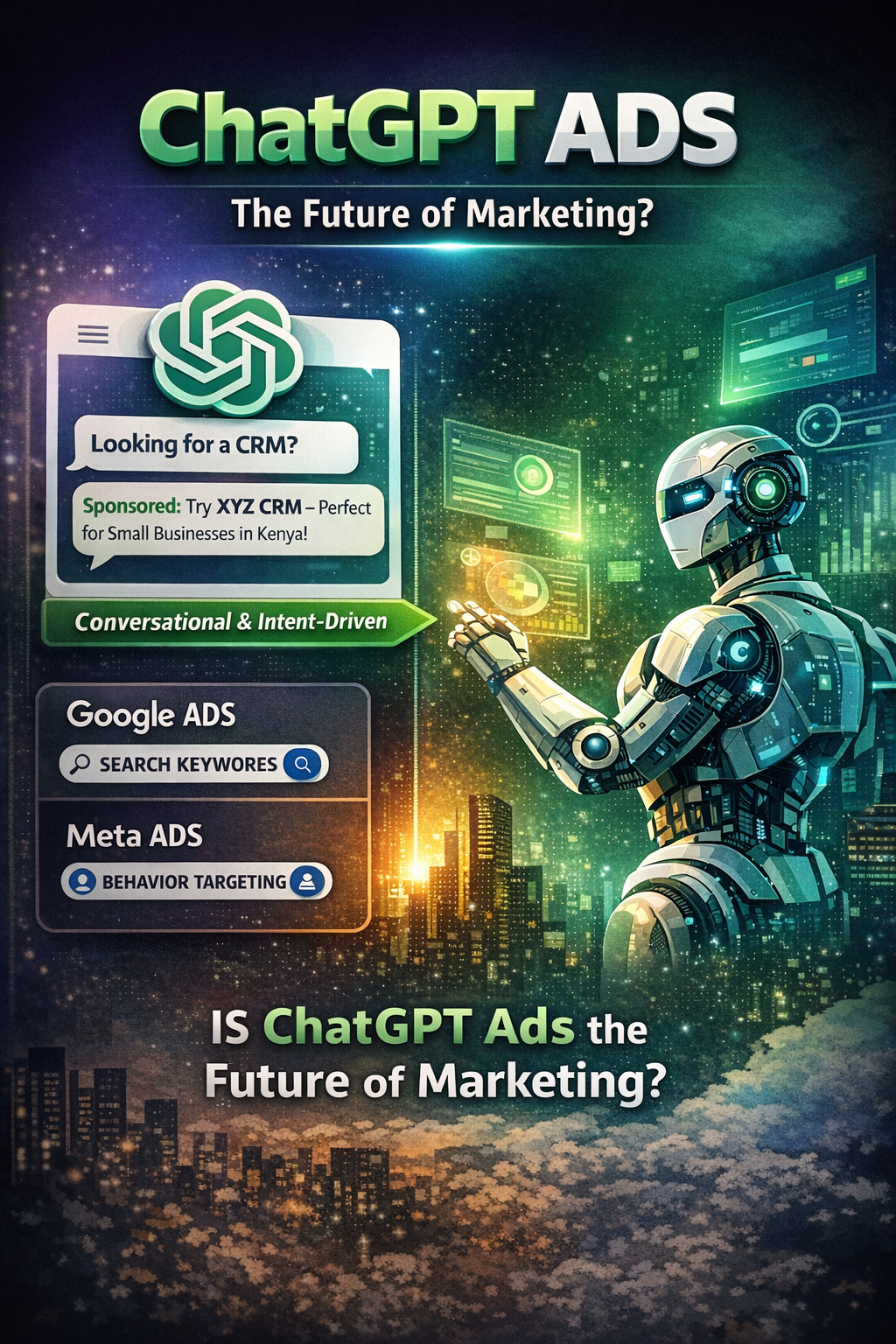
ChatGPT Ads refer to native, context-aware promotional placements embedded within AI-powered conversations. Instead of interrupting users with banners or feeds, these ads appear inside relevant responses, aligned with the user’s intent at the exact moment they’re seeking information.
Think of it as assisted discovery, not interruption.
If a user asks:
“What’s the best CRM for small businesses in Kenya?”
A ChatGPT Ad could naturally recommend a sponsored CRM, clearly labeled within the response.
When Were ChatGPT Ads Introduced?
ChatGPT itself launched publicly in November 2022, but advertising was intentionally excluded in the early stages to prioritize trust and product adoption.
By 2024–2025, discussions around monetization evolved. OpenAI began testing non-intrusive, transparent ad formats, focusing on:
- Clear labeling
- Contextual relevance
- User value over volume
Unlike traditional ad platforms, ChatGPT Ads were designed after understanding user behavior, not before.
That’s a major difference.
How ChatGPT Ads Work
ChatGPT Ads are fundamentally intent-driven, not behavior-tracked.
Key characteristics:
Contextual targeting based on live conversation intent
- No third-party cookies
- No retargeting loops
- High trust environment
- Low ad fatigue
Instead of “who you are,” the system focuses on what you need right now.
For privacy-conscious regions and tightening data regulations, this is huge.
ChatGPT Ads vs Google Ads vs Meta Ads
Let’s tell it like it is.
Google Ads
Google Ads dominate search intent, but:
- CPCs are rising fast
- Competition is brutal
- Users know they’re being sold to
- You win auctions,not attention.
Meta Ads
Meta Ads thrive on interest and behavior targeting, but:
- iOS privacy changes hurt tracking
- Ad fatigue is real
- Attention spans are shrinking
- You interrupt to convert.
ChatGPT Ads
ChatGPT Ads flip the model:
- No feeds
- No auctions (at least for now)
- No distraction
- High-intent, high-trust moments
You assist, not interrupt.
| Platform | Targeting Style | User Mindset | Trust Level |
|---|---|---|---|
| Google Ads | Keyword intent | Searching | Medium |
| Meta Ads | Behavioral | Browsing | Low–Medium |
| ChatGPT Ads | Conversational intent | Problem-solving | High |
That trust gap matters.
Why ChatGPT Ads Stand Out
People believe answers more than ads.ChatGPT Ads sit inside answers.
Unique advantages:
- First-party intent data
- Zero scroll dependency
- Built for long-form decisions
- Perfect for B2B, education, SaaS, finance, and high-consideration services
This is especially relevant for African markets, where trust, clarity, and education drive conversion more than flashy creatives.
The Future Impact of ChatGPT Ads
ChatGPT Ads won’t replace Google or Meta overnight, but they will reshape the funnel.
Likely future shifts:
- AI becomes the first touchpoint, not search
- Brands optimize for answer visibility, not just rankings
- Content plus ads merge into decision support
- Marketers move from “campaigns” to conversational presence
In short:
If search was Web 2.0, conversational AI is Web 3.0 behavior.
Should Marketers Embrace ChatGPT Ads?
Yes, but strategically.
Marketers who will win:
- Service-based businesses
- Consultants and agencies
- SaaS and fintech
- Education and training brands
- B2B companies targeting decision-makers
Marketers who will struggle:
- Low-trust products
- Generic dropshipping
- Clickbait-dependent funnels
ChatGPT Ads reward clarity, value, and credibility.
If your offer can’t stand on logic alone, it won’t survive here.
What This Means for Digital Marketers in Kenya
For Kenyan businesses and brands:
- Early adoption = lower competition
- AI-assisted discovery = higher intent leads
- Less reliance on inflated CPC platforms
This is an opportunity to compete on intelligence, not budget.
At Digital Marketer Kenya, we see ChatGPT Ads as:
A signal that marketing is moving from persuasion to problem-solving.
And that’s a good thing.
Final Thoughts: Is ChatGPT Ads the Future?
Search will still exist. Social will still sell.
But AI-led conversations will increasingly guide decisions before either gets a chance.
Smart marketers won’t wait until it’s crowded.
They’ll learn it early.
Test it wisely.
And integrate it into a broader, AI-first strategy.
Because the future of advertising isn’t louder.
It’s smarter.